
The Transition from Pharmacovigilance to Multivigilance in Modern Life Sciences
May 26, 2026
Managing safety data within the life sciences industry has historically followed a predictable framework. The drug safety department operates within a specialised database. The clinical team tracks trial irregularities in a separate infrastructure. Concurrently, the medical device division utilises an independent workflow to monitor device malfunctions.
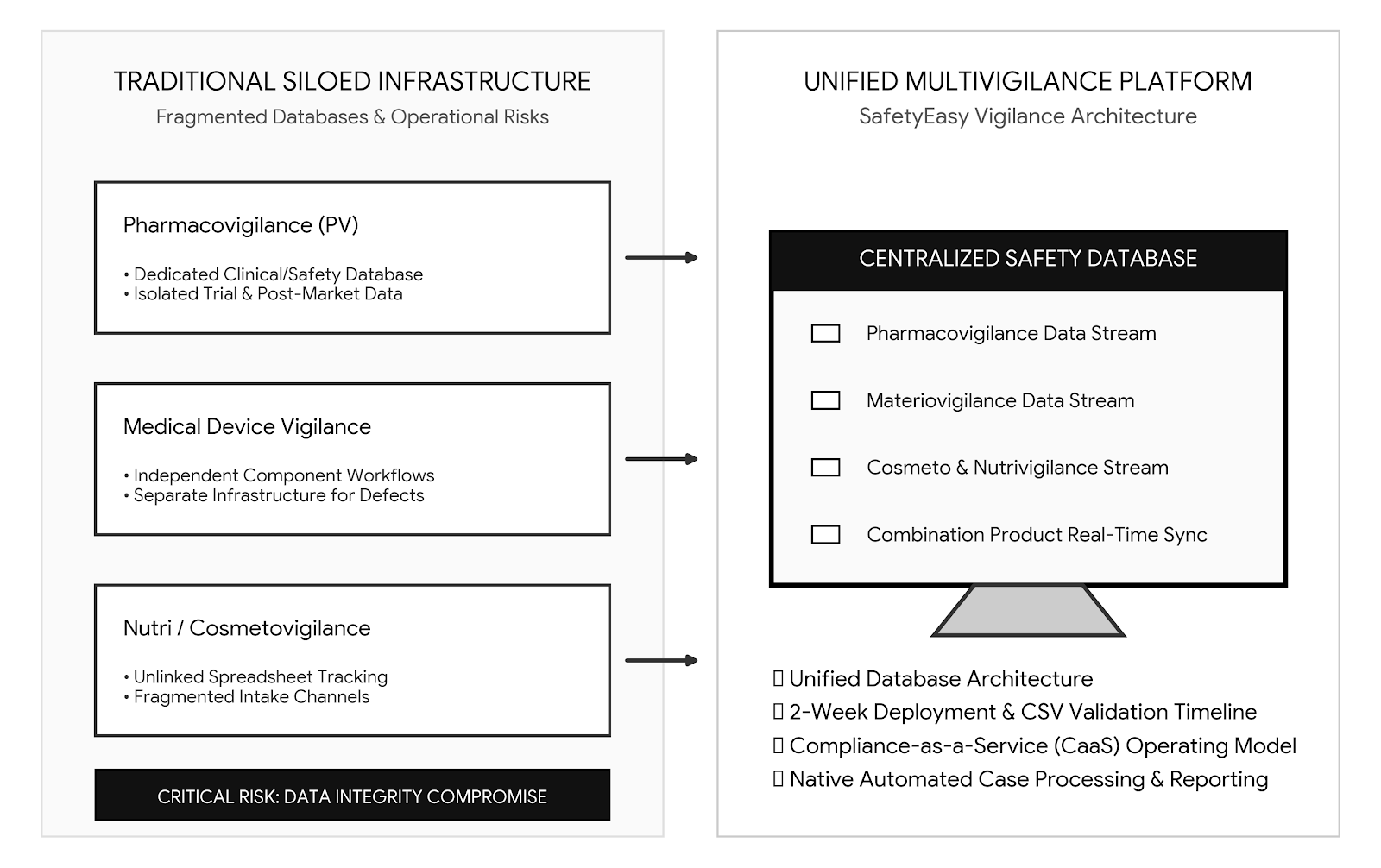
Operating these safety disciplines in isolation was standard procedure for decades. However, the introduction of complex combination products, advanced biologics, and shifting international frameworks means that maintaining separate databases poses an operational risk. Fragmented systems compromise data integrity and increase regulatory non-compliance exposure.
Regulatory compliance must not function as a bottleneck to commercial scaling or product innovation. Consequently, forward-thinking life science leaders, contract research organisations, and marketing authorisation holders are transitioning toward a unified multivigilance strategy. This systemic shift centres on a robust platform: SafetyEasy Vigilance.
Defining Multivigilance and Its Industry Importance
Historically, safety monitoring focused almost exclusively on Pharmacovigilance, which entails the detection, assessment, understanding, and prevention of adverse effects related to pharmaceutical products.
Modern healthcare innovation requires a more integrated approach. Companies frequently market complex biologic drugs delivered via specialised companion medical devices, sometimes alongside portfolios of specialised nutraceuticals. Managing these overlapping safety profiles in isolated systems introduces critical data gaps.
Multivigilance addresses this vulnerability by consolidating distinct safety workflows into a single, comprehensive database:
Pharmacovigilance: Capturing and managing adverse drug reactions and serious adverse events.
Medical Device Vigilance (Materiovigilance): Tracking and analysing performance issues, defects, or deterioration in medical devices.
Cosmetovigilance and Nutrivigilance: Monitoring adverse reactions related to cosmetic formulas and dietary supplements.
Consolidating these disciplines provides a centralised, 360-degree view of the entire product ecosystem, ensuring comprehensive oversight.
Technical Capabilities of SafetyEasy Vigilance
Developed by AB Cube, SafetyEasy is a cloud-based safety database engineered to manage complex safety data without requiring extensive local IT infrastructure or prolonged deployment timelines.
The platform offers specific operational advantages for life science organisations:
1. Unified Database Architecture
SafetyEasy consolidates all vigilance domains under a single architecture, eliminating the need for fragmented software licenses. This centralisation allows teams to analyse cross-border trends, detect safety signals early, and cross-reference data across drugs, medical devices, and combination products simultaneously.
2. Global Regulatory Alignment
SafetyEasy is built to maintain compliance with international regulatory standards out of the box. The platform incorporates:
Full compatibility with ICH E2B (R3) data transmission standards.
Native compliance with FDA 21 CFR Part 11 and GAMP 5 validation requirements.
Structural support for specialised medical device reporting formats, including HL7 eMDR for the FDA and European MDCG guidelines.
Automated system updates to maintain alignment with evolving international safety regulations without requiring manual IT intervention.
3. Automated Case Processing
Manual data entry introduces inefficiencies and increases human error rates. SafetyEasy integrates automation modules that optimise daily processing workflows. The system utilises natural language processing to extract data during case intake, transferring relevant information directly into Individual Case Safety Reports. Furthermore, integrated logic triggers automated submissions to global health authorities based on regional reporting deadlines.
4. Accelerated Deployment and Validation Timeline
Traditional safety database implementations often require months of extensive validation scripting, stress testing, and operational downtime. Because SafetyEasy is cloud native and pre-configured for standard industry use cases, the full deployment, customisation, and computer system validation process can be completed within two weeks.
Compliance as a Service (CaaS)
Operational efficiency involves transforming regulatory requirements into a strategic advantage. By combining specialised Computer System Validation expertise with agile software solutions such as SafetyEasy, Valina Services delivers a managed Compliance as a Service model.
This framework removes the burden of software validation, ongoing database maintenance, and evolving regulatory submissions from internal teams. Organisations can redirect internal resources away from administrative maintenance and focus fully on data analysis, signal detection, and accelerating the delivery of therapeutics to market.
Optimise Your Vigilance Infrastructure
Whether managing Phase 1 to 3 clinical trials, navigating post-authorisation safety studies, or scaling post-marketing surveillance across diverse product portfolios, a unified safety database remains a foundational asset.
To discuss your safety data strategy or to arrange a technical demonstration of the SafetyEasy platform, contact the Valina Services technical team at contact@valina-services.com for a professional consultation.
Disclaimer and Regulatory Information: The content provided on this website is intended for general informational and educational purposes only. It does not constitute formal legal, regulatory, or technical compliance advice.